Installation & Roofs
Masterclass: Who Services Solar Panels When Your Installation Company Goes Out of Business in Florida?
Don't be left in the dark. Learn how to secure expert service for your solar system when your original installer goes out of business.
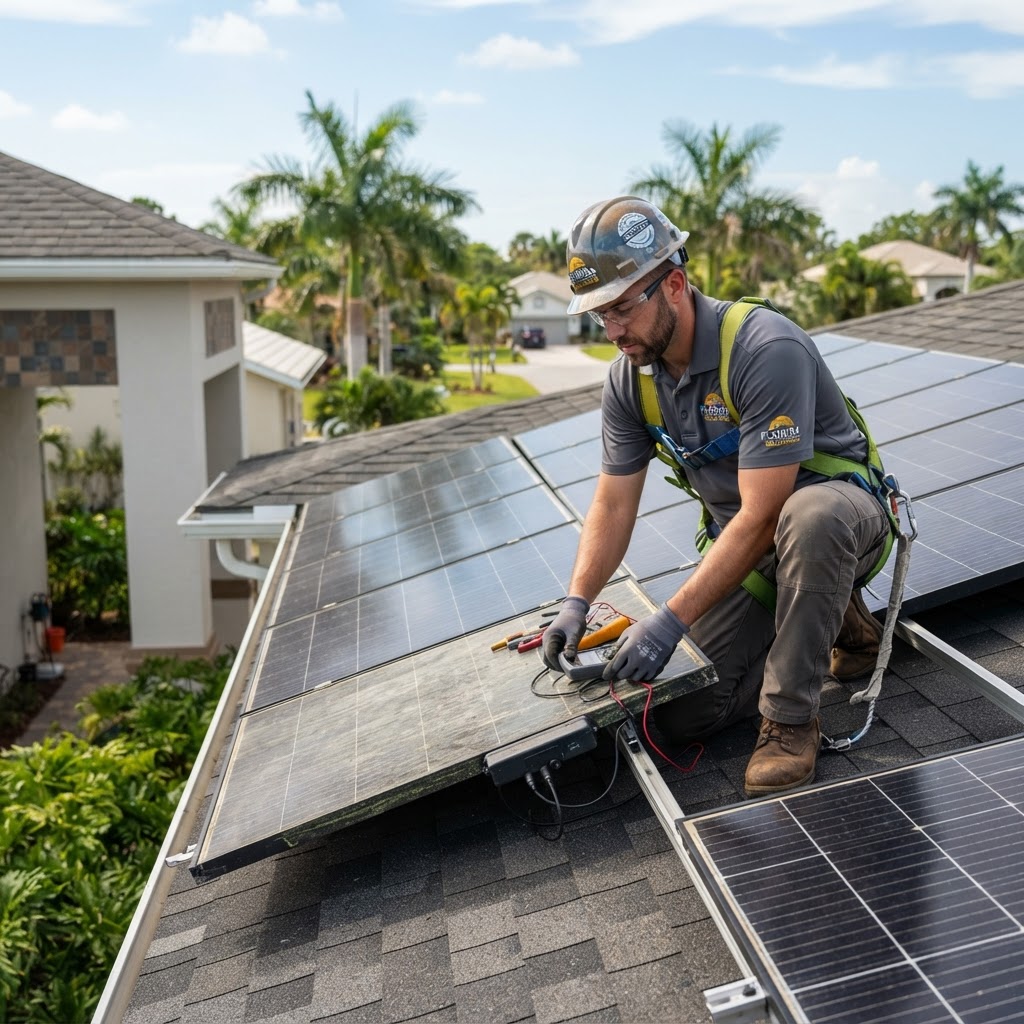
Masterclass: Who Services Solar Panels When Your Installation Company Goes Out of Business in Florida?
The rapid expansion of the residential solar market in Florida has created a significant secondary challenge for homeowners: the "orphaned system." As high-profile solar installation companies face insolvency, mergers, or complete liquidation, thousands of Florida homeowners find themselves with high-tech power plants on their roofs but no reliable partner to maintain them. This masterclass guide provides a comprehensive, expert-level framework for securing independent service, navigating complex warranty landscapes, and ensuring your solar investment remains a productive asset for decades.
What is an "Orphaned" Solar System?
An orphaned solar system is a residential photovoltaic (PV) installation where the original installation entity is no longer operating, has been acquired by a non-service-oriented firm, or has simply abandoned the service contract. In Florida’s high-heat, high-humidity, and storm-prone environment, the long-term operational success of these systems relies heavily on proactive maintenance, yet many homeowners lose their only point of contact when the installer fails.
1. Defining Your Service Ecosystem
To solve the service problem, you must first understand the three distinct pillars of your system’s operational health:
The Hardware Manufacturer
These entities (e.g., Enphase, SolarEdge, Qcells) are legally bound by their equipment warranties regardless of your installer’s status. Your panels and inverters are separate from the installation firm.
The Financing Entity
The firm that holds your loan or lease. They often have a vested interest in the system continuing to function. If your system stops producing, the lender’s collateral (your roof system) is at risk.
The Service Provider (Operations & Maintenance)
This is the party responsible for the physical labor (inspections, repairs, cleaning). This is the pillar that disappears during a bankruptcy.
2. Navigating Florida’s Technical Landscape
Florida’s solar environment is uniquely demanding due to corrosive salt air in coastal regions and intense UV exposure inland. When an installer fails, your system may have been left in a "state of disrepair" that you aren't even aware of.
Why Generic Technicians Aren't Enough
Residential solar is a high-voltage electrical field. General roofing contractors or standard electricians may not have the specific training to diagnose ground faults in DC circuitry, troubleshoot micro-inverter communication errors, or perform torque-verification on rooftop mounting rails according to Florida Building Code (FBC) standards.
3. The Florida Homeowner’s Step-by-Step Service Recovery Plan
Step A: The Baseline System Audit
If you have lost your installer, you must hire an independent Operations and Maintenance (O&M) firm to conduct a comprehensive system health audit. Do not wait for a component to break before finding a partner.
- Visual Inspection: Looking for signs of pest intrusion, wire damage, or loose racking hardware.
- Thermal Imaging: Using drones or handheld infrared cameras to detect "hot spots" on panel cells which indicate early failure.
- Electrical Verification: Measuring string voltages and inverter operating parameters to ensure the system is hitting expected performance metrics.
Step B: The NABCEP Gold Standard
When searching for a new service partner in Florida, your primary filter must be NABCEP Certification (North American Board of Certified Energy Practitioners). These professionals have met the most rigorous training and testing standards in the industry. They are the most qualified to "adopt" a system they did not install, as they have the expertise to audit and assume liability for someone else’s workmanship.
Step C: Manufacturer-Led Service Escalation
If a major component fails, contact the manufacturer’s technical support line directly. Manufacturers maintain lists of "Preferred Service Partners" in Florida—these are local, certified companies that the manufacturer trusts to perform warranty-covered repairs. This is often your fastest route to a quality, insured, and manufacturer-authorized repair.
4. Addressing Common "Orphaned" Scenarios
If You Have a Solar Loan
Check your loan agreement for service-related clauses. Some specialized solar lenders (like GoodLeap or Dividend) have regional service networks to protect their loan portfolios. If your system is underperforming and your installer is gone, notify your lender in writing. They may be able to direct you to an approved service provider to ensure the system remains functional.
If You Have a PPA or Lease
You are in a different position. The third-party owner of the equipment (the lessor) is legally responsible for maintenance under your contract. If they are unresponsive, you have legal grounds to escalate. Keep a written log of all service requests and the company's failure to perform. If the system stops generating power, this is a material breach of contract that can be reported to the Florida Attorney General’s Consumer Protection Division.
5. Florida-Specific Regulatory Considerations
In Florida, the "unlicensed practice of contracting" is a severe regulatory issue. Always verify a potential O&M partner’s license status via the Florida DBPR (Department of Business and Professional Regulation) website. Never allow a handyman or a general contractor to touch your solar panels. Solar is governed by strict structural and electrical codes (F.S. 489). Using unlicensed service providers can void your remaining equipment warranties and create massive liability risks for your property insurance.
6. Disambiguation FAQ
Q: Can I just call any local electrician to fix my solar panels? A: No. Solar systems involve high-voltage DC electricity and specialized interconnection protocols. You must hire a licensed electrical contractor with specific experience in PV systems and preferably an active CV (Certified Solar Contractor) license.
Q: Will hiring a new solar service company void my original equipment warranty? A: Generally, no. Equipment warranties are tied to the manufacturer, not the installer. However, poor workmanship by an unqualified service provider could void your warranty. Using a NABCEP-certified professional is the best way to safeguard your warranty coverage.
Q: How often should an orphaned system be serviced? A: We recommend an annual professional preventative maintenance audit, especially in Florida, to account for hurricane preparedness, roof integrity checks, and electrical performance monitoring.
Q: What if I can’t find my serial numbers or system documentation? A: Your inverter manufacturer (Enphase, SolarEdge) can often pull your system specifications using your address and the original installer’s account ID.
Q: Does my homeowner's insurance cover repairs for an orphaned system? A: It depends on your policy. Standard policies cover damage from "named perils" (like hurricanes) but generally do not cover normal wear and tear. Always confirm solar coverage with your specific insurance provider.
7. Deep-Dive: Technical Risks of Neglect in the Florida Climate
Neglect of an orphaned system is not a neutral act. In the Florida environment, it is an accelerant of decay.
Corrosion and Salt Air
Near Florida’s coasts, salt air can lead to severe corrosion on racking components within 3-5 years. When an installer fails, small oxidation spots go unnoticed and develop into structural failures where the racking can no longer support the weight of the panels, particularly during high-wind events like hurricanes.
Pests and Rodents
Solar panels provide shade and shelter for local Florida wildlife, including squirrels and rats. Once nesting begins under the panels, rodents often chew through critical DC wiring, leading to arc faults—the leading cause of solar system fires. A regular O&M audit will identify this risk before the wires are compromised.
Conclusion
Finding a new service partner for your solar system is an empowering act of asset management. You are not just repairing a panel; you are ensuring your home's energy independence for the next two decades. Prioritize NABCEP certification, stay in constant contact with the hardware manufacturer, and keep rigorous documentation of all maintenance performed.
For more on protecting your solar assets, read our Ultimate Survival Guide for Solar Bankruptcy and our Consumer Protection Dossier.
If you are currently struggling with an orphaned system and need assistance performing a baseline audit or finding a trusted service partner in Florida, we are here to help.
Request your trusted, independent system audit consultation here.
<sub>Disclaimer: This website and its content are generated using Artificial Intelligence (AI). AI-generated content can be inaccurate, incomplete, or outdated. This information is for general educational purposes only and does not constitute professional legal, financial, or engineering advice. Visitors are strongly encouraged to conduct their own due diligence and verify all information with licensed experts and government sources before making decisions. SunRoute Florida assumes no liability for reliance on this information.</sub>",id:
Want these numbers for your own home?
Get a free, independent consultation with a Florida advisor — no pressure, no obligation.
Request my free consultation