Financing
Solar Panel Financing Options in Florida 2026
Navigating solar financing can be complex. We break down the available options for Florida homeowners to help you decide which path makes financial sense for your home.
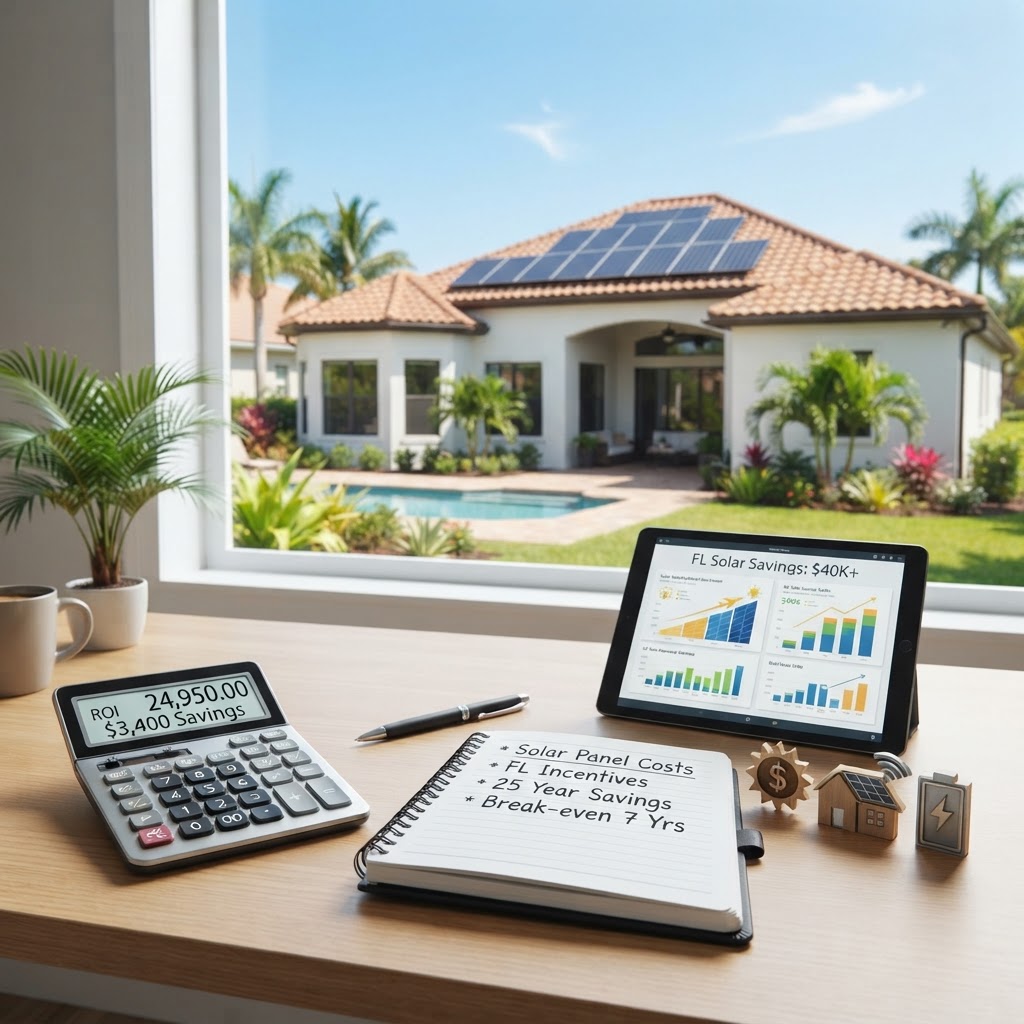
Solar Panel Financing Options in Florida 2026
As we enter 2026, the economics of going solar in Florida have shifted. While the federal Section 25D residential tax credit is no longer available for new installations, solar remains a powerful tool for long-term utility bill management, especially as Florida utilities like FPL, Duke Energy, and TECO continue to raise rates. Homeowners are now focusing on financing strategies that minimize interest costs and maximize monthly cash flow.
Key Takeaways
- Federal Credit: The 30% federal residential solar tax credit (Section 25D) expired for systems placed in service after December 31, 2025.
- Florida Incentives: Florida continues to offer a 100% property tax exemption on the added value of solar systems and a statewide sales tax exemption.
- Net Metering: Florida maintains 1:1 retail net metering for residential customers.
- Legal Protections: HOA solar bans are prohibited by F.S. 163.04.
Top Financing Paths for Florida Homeowners
1. Cash Purchase
Paying cash remains the gold standard for ROI. By avoiding interest and dealer fees, your payback period is typically shorter, allowing you to capture the full value of every kilowatt produced.
2. Solar Loans
Many homeowners opt for specialized solar loans. Look for products that offer no prepayment penalties, allowing you to pay down the principal early if your budget allows.
3. Third-Party Ownership (PPAs and Leases)
While the 30% credit is gone for individuals, third-party companies may still leverage commercial tax incentives. This can sometimes lower your entry cost, though you forfeit the long-term equity benefits of ownership.
Local Incentives and Policies
Florida remains a solar-friendly state for property owners. You benefit from:
- Property Tax Exemption: You do not pay extra property taxes for the increase in home value caused by your solar installation.
- Sales Tax Exemption: All solar energy equipment is exempt from Florida sales tax.
- Net Metering: Florida continues to support 1:1 retail net metering, meaning you receive full credit for the excess energy your system sends back to the grid.
Utility Context: Why Efficiency Matters
With the recent rate hikes from FPL, Duke Energy Florida, TECO, and JEA, your "cost of inaction" has increased. However, it is important to remember that actual savings vary significantly based on your specific roof orientation, shading, and individual consumption patterns. There is no one-size-fits-all solution.
Making an Informed Choice
Financing your solar system is a significant household decision. Avoid high-pressure sales tactics that promise "zero-cost" solar; instead, look for transparent documentation regarding total interest, equipment warranties, and realistic energy production estimates.
If you are ready to evaluate whether solar makes sense for your specific roof and budget, we invite you to request a free, no-pressure consultation. We provide independent analysis to help Florida homeowners make data-driven decisions.
<sub>Disclaimer: This website and its content are generated using Artificial Intelligence (AI). AI-generated content can be inaccurate, incomplete, or outdated. This information is for general educational purposes only and does not constitute professional legal, financial, or engineering advice. Visitors are strongly encouraged to conduct their own due diligence and verify all information with licensed experts and government sources before making decisions. SunRoute Florida assumes no liability for reliance on this information.</sub>",
Want these numbers for your own home?
Get a free, independent consultation with a Florida advisor — no pressure, no obligation.
Request my free consultation