Batteries & Hurricanes
Do Solar Batteries Protect Florida Homes During Hurricanes?
Discover how solar batteries perform during Florida storm season and whether they provide the grid independence you need when the power goes out.
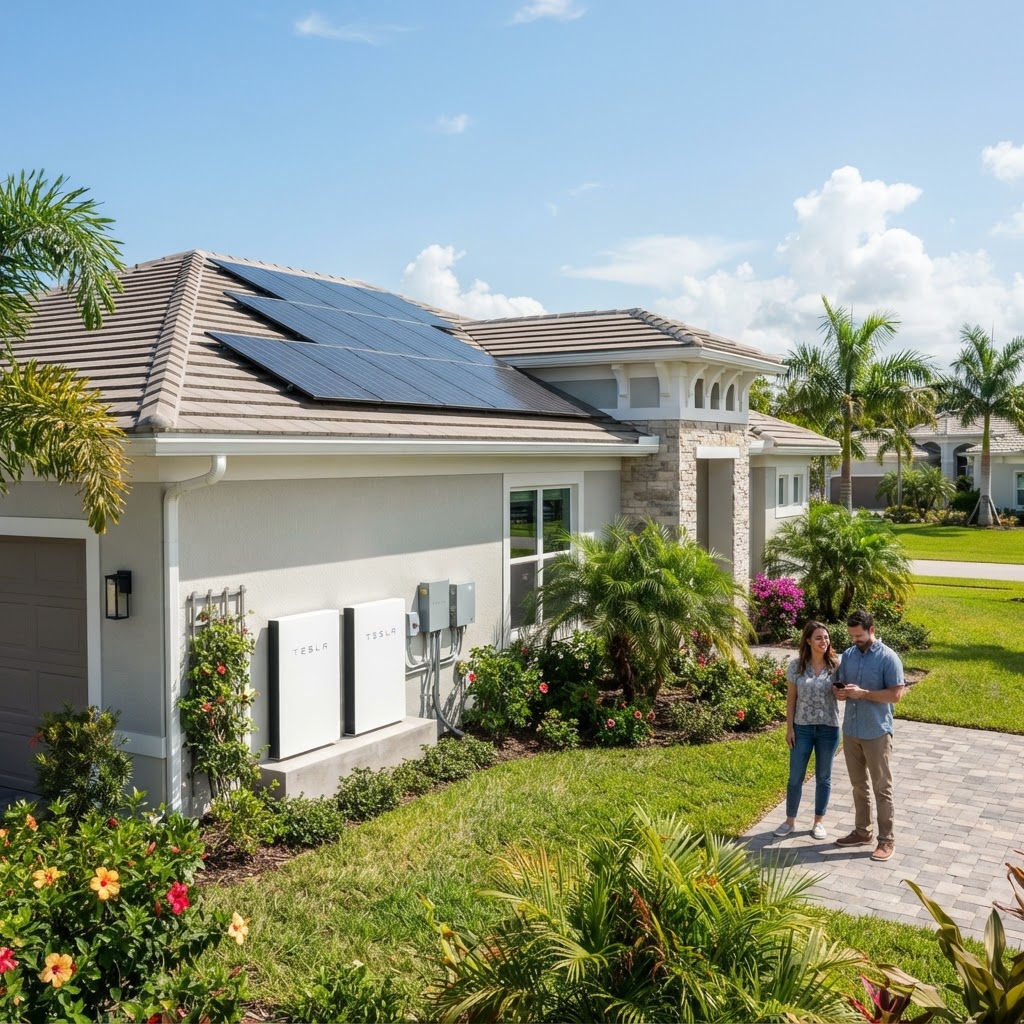
Key Takeaways for Florida Homeowners
- Solar batteries provide critical backup power when the grid fails during hurricanes, provided they are configured for islanding.
- Florida retains 1:1 net metering, allowing you to bank energy credits with utilities like FPL, Duke Energy, and TECO.
- Solar equipment remains exempt from Florida sales tax and added property tax value.
- Federal 25D tax credits expired at the end of 2025, making efficient system design and financing more important than ever.
- Not all battery systems are equal; you must choose a solution that allows for 'grid-forming' capability to run during an outage.
The Reality of Hurricane Season in Florida
For any Floridian, the arrival of June 1st brings a familiar sense of preparation. As we watch the radar for tropical developments, the conversation often shifts toward energy resilience. With recent approved rate increases from major utilities like Duke Energy Florida and TECO, more homeowners are asking: do solar batteries protect Florida homes during hurricanes?
The short answer is yes, but it requires specific technology. A standard grid-tied solar system is designed to shut down when the grid fails to protect utility workers. To keep your lights on, your battery system must be capable of 'islanding'—effectively disconnecting your home from the main grid while keeping your solar panels active to recharge the battery during daylight hours.
Understanding How Battery Backup Works
When a storm like Ian or Milton impacts our state, the grid becomes fragile. Fallen lines and transformer damage can leave neighborhoods in the dark for days. A battery backup system acts as a local reservoir. When the power goes out, an automatic transfer switch kicks in within milliseconds.
Can My Panels Charge the Battery During an Outage?
If you have a battery system configured for backup, your solar panels continue to produce energy even while the neighborhood is dark. During the day, the panels power your essential loads—like your refrigerator, Wi-Fi, and medical equipment—while simultaneously recharging your battery. This allows you to cycle through the night without relying on noisy, fuel-dependent portable generators.
Navigating the Florida Solar Landscape in 2026
As of 2026, the legislative environment in Florida remains generally supportive of solar, even as federal incentives have shifted.
The End of the Federal 25D Credit
While the 30% federal residential solar tax credit (Section 25D) sunset at the end of 2025, this does not mean the end of solar viability. Many homeowners are now focusing on the 'total cost of ownership' rather than upfront tax incentives. With electricity rates rising across FPL, Duke Energy, and JEA service territories, the long-term ROI remains strong. We recommend consulting with an independent advisor to look at how specific financing models or third-party-owned lease structures might still offer economic advantages.
Continued State-Level Protections
Florida remains a strong state for solar owners in three key ways:
- Net Metering: Florida currently maintains 1:1 retail net metering, allowing you to bank excess energy generated during the sunny months to offset your grid usage during the cloudier storm season.
- Sales Tax Exemption: Solar equipment is exempt from Florida state sales tax, reducing the overall capital expenditure.
- Property Tax Exemption: The added value your solar installation brings to your home is fully exempt from property taxes under state law.
- HOA Protection: Under F.S. 163.04, your homeowners association cannot legally prohibit the installation of a solar system, provided it meets standard engineering and safety codes.
Choosing the Right System for Your Needs
Not every home requires the same level of backup. If you live in an area served by OUC or JEA, or are in the heart of FPL territory, your local grid infrastructure may vary.
We always tell homeowners: don't over-buy. You need a system that balances your energy consumption with your resiliency goals. During our consultations, we look at your actual utility bills to determine what size battery you actually need to survive a multi-day outage. Because savings vary by home based on roof orientation, shading, and local utility rate structures, there is no 'one-size-fits-all' package.
Planning for Resilience
Preparing for hurricane season is about more than just stocking water and canned goods; it is about infrastructure. If you are tired of watching your monthly energy costs climb or are worried about the frequency of grid outages in your zip code, it is time to look at the numbers objectively.
At SunRoute Florida, we believe in transparency. We don't employ high-pressure sales tactics because the data speaks for itself. If you are ready to evaluate your home's potential for solar energy independence, we invite you to reach out for a no-pressure consultation at /consultation. We will review your utility data and provide a clear, honest assessment of what a battery system can—and cannot—do for your specific property.
Want these numbers for your own home?
Get a free, independent consultation with a Florida advisor — no pressure, no obligation.
Request my free consultation