Electric Bills & Rates
FPL Solar Tiers Explained: The Comprehensive Guide to Avoiding Tier 2 Insurance Mandates
Understand the critical 10 kW threshold for FPL solar interconnection. Learn how Tier 1 vs. Tier 2 insurance mandates affect your solar investment ROI.
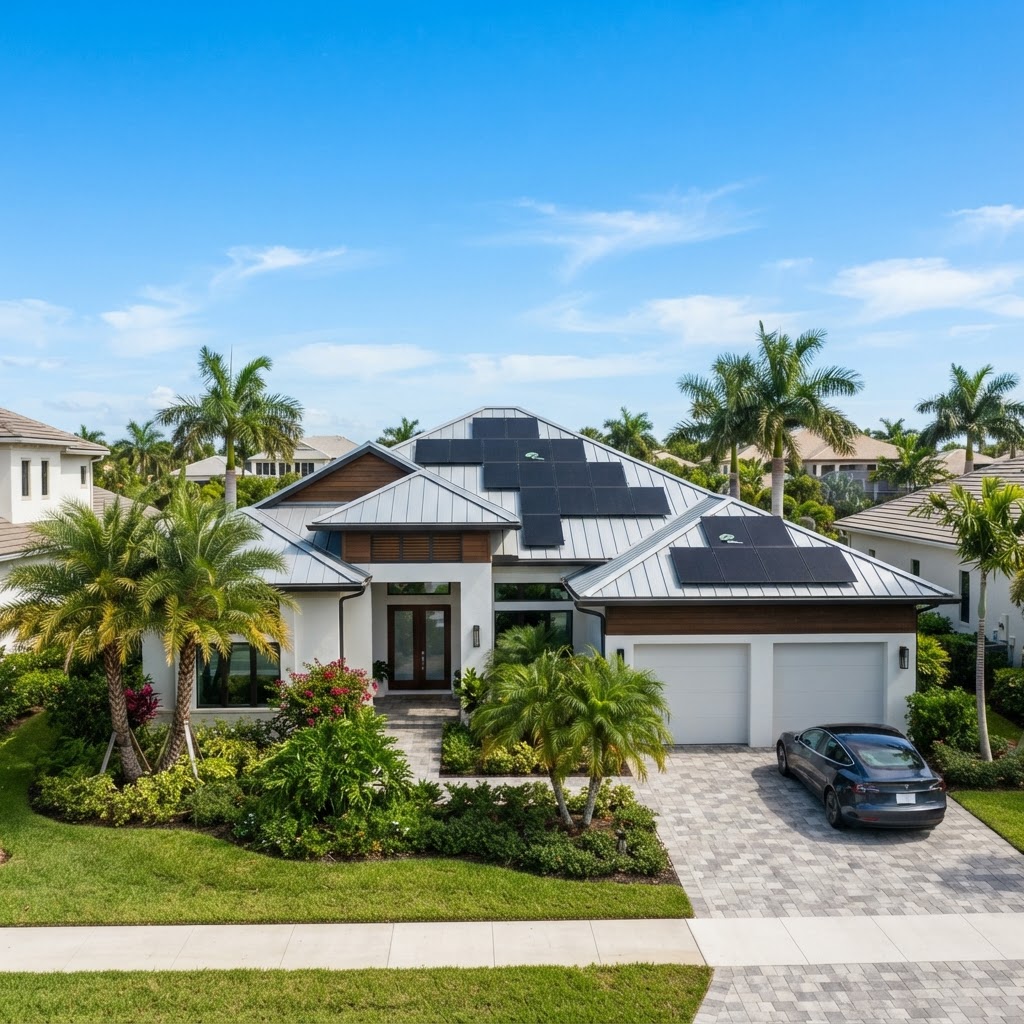
FPL Solar Tiers Explained: The Comprehensive Guide to Avoiding Tier 2 Insurance Mandates
Navigating the transition to residential solar energy in Florida involves a critical junction that often surprises homeowners during the engineering design phase: the Florida Power & Light (FPL) Interconnection Tier threshold. As a Florida homeowner, your system's design doesn't just dictate your energy production profile—it mandates your legal, financial, and insurance obligations to the utility. Understanding the binary shift between Tier 1 and Tier 2 solar interconnection is not merely a logistical step; it is a fundamental pillar of long-term asset management and return-on-investment (ROI) optimization.
This masterclass provides an exhaustive, technical deep-dive into the architectural, regulatory, and economic implications of utility interconnection tiers in Florida. We will analyze why the 10 kW AC threshold acts as a "financial cliff," how strategic equipment sizing can prevent unnecessary liability, and the long-term impact of mandatory commercial-grade insurance policies on household solar economics.
I. Understanding Utility Interconnection Tiers: The Grid Integration Framework
In the state of Florida, major investor-owned utilities (IOUs)—including FPL, Duke Energy Florida, and Tampa Electric Company (TECO)—operate under standardized net-metering interconnection agreements approved by the Florida Public Service Commission (PSC). These agreements classify residential solar systems into "Tiers" based on the system's ability to inject power into the local distribution grid.
The Tier 1 Threshold
A Tier 1 solar system is defined under FPL’s Net Metering Guidelines as a system with an inverter nameplate AC capacity of 10 kW or less. These systems are deemed "low impact" to the local transformer and distribution grid. Consequently, FPL facilitates a highly streamlined, low-friction application process. Critically, Tier 1 status carries no mandatory requirement for supplemental liability insurance, as the utility deems the system’s footprint inherently residential in nature.
The Tier 2 Threshold
A Tier 2 system encompasses installations with an AC nameplate capacity greater than 10 kW and up to 100 kW. These systems are classified as having the potential for significant load impacts on the local electrical infrastructure. Consequently, the interconnection path is significantly more rigorous. Homeowners must submit formal engineering diagrams, undergo a more detailed review process, pay a non-refundable $400 application fee, and satisfy the mandatory requirement for a $1,000,000 personal liability policy specifically covering the solar asset.
II. The Technical Dissection: AC vs. DC Capacity
To manage your tier status, you must master the fundamental discrepancy between DC and AC specifications.
Defining DC Array Capacity (STC)
Standard Test Conditions (STC) define the panel output on your roof. If you install 35 panels rated at 400W each, your array DC capacity is 14 kW. This is the figure that often confuses homeowners and contractors.
Defining AC Inverter Capacity
The FPL tier is governed exclusively by the inverter's maximum output power (kVA/kW). If your solar system uses 14 kW of panels but is capped by an inverter that only converts 10 kW to the grid, your system is technically a Tier 1 system. This technical distinction allows for "DC/AC Oversizing."
The Engineering of Oversizing
Strategic oversizing involves installing a DC array capacity roughly 120-140% of the inverter AC capacity. This design strategy boosts production during the "shoulders" of the day (early morning and late afternoon) and during cloud-cover events, while effectively capping the peak production at 10 kW to avoid the Tier 2 insurance mandate. This is the "Gold Standard" of residential Florida solar design. Read more in our Guide to Solar Equipment Sizing.
III. The Economic Impact: A Comparative Cost-Benefit Masterclass
Staying under the 10 kW AC threshold is not just a regulatory choice; it is an economic strategy. Let us break down the life-cycle costs.
The "Silent" Costs of Tier 2
Moving from Tier 1 to Tier 2 is not just a $400 fee; it is a long-term liability obligation:
- Insurance Inflation: A $1M liability policy is a recurring annual expense. Depending on your current insurance provider, this adds $300 to $800 annually.
- Cumulative Loss: Over a 25-year system life, the cost of Tier 2 insurance—compounded with the initial fee and the administrative burden of annual renewal filings with the utility—can effectively erode $15,000 to $20,000 in net solar savings.
- The "Umbrella" Trap: Many homeowners assume their standard insurance covers this. It does not. It requires an umbrella policy or a specific rider, which can increase overall home insurance costs. Consult our Homeowner’s Insurance Solar Guide for details.
ROI Maximization for Tier 1
By capping the inverter at 10 kW, you achieve a higher ROI by eliminating the insurance premium, avoiding the $400 fee, and simplifying the paperwork requirement. For 90% of Florida homes, 10 kW AC is more than sufficient to achieve Net-Zero energy consumption.
IV. Technical Deep-Dive: When is Tier 2 Actually Justified?
There are scenarios where the Tier 2 escalation is unavoidable or advisable.
1. The High-Volume Consumer
If your household usage exceeds 3,000 kWh per month—driven by massive pool equipment, multiple electric vehicles, and inefficient HVAC systems—a 10 kW system may fail to offset your bill. In this instance, Tier 2 is a necessity to achieve energy independence.
2. Future-Proofing
If you plan to add more load later (e.g., a home addition, home business, or second EV), building as Tier 2 initially may save on labor costs. However, you must weigh these upfront costs against the insurance liability.
V. Disambiguation FAQ: Navigating Interconnection
Q: If my panels are 12kW, does FPL count that as Tier 2? A: No. FPL focuses on the AC nameplate rating of the inverter. If your inverter is a 10 kW unit, the utility classifies your system as Tier 1.
Q: Does Florida Statute dictate these tiers? A: These tiers are governed by the Interconnection Agreements filed with the Florida Public Service Commission (PSC). You can review these rules in the FPL Net Metering Tariff. Learn more about your rights at our Florida Consumer Protection Dossier.
Q: Can I install a 10 kW inverter now and upgrade to 12 kW later? A: Yes, but you will trigger a new interconnection review process. You would have to pay the $400 fee and provide the insurance documentation at that time.
Q: Does my insurance company need proof of Tier 2 compliance? A: Yes, you must provide FPL with an Insurance Certificate (COI) that specifically acknowledges the solar liability requirement.
VI. Addressing System Degradation and Maintenance Risks
Neglecting your tier status can lead to compliance issues. If you install a Tier 2 system without informing FPL, you must immediately rectify the situation to remain compliant.
The Importance of Annual Audits
For Tier 2 systems, annual insurance renewal is non-negotiable. Maintain a digital "Compliance Folder" containing:
- Your executed Interconnection Agreement.
- The current Certificate of Insurance (COI) with the solar liability rider.
- The official approval letter from FPL.
VII. Deep-Dive: Grid Stability and Why Tiers Exist
To understand the 10 kW cutoff, one must look at grid stability engineering standards.
Transformer Saturation
Local distribution transformers are sized for the expected peak load of the homes they serve. Adding a solar system injects power back into this transformer. If too many homes in a neighborhood inject significant power, the voltage can rise, potentially triggering protective equipment to trip and shut off the grid.
The 10 kW Threshold Analysis
The 10 kW limit is essentially an engineering buffer. It allows for mass residential adoption without requiring a grid study for every single home. Tier 2 systems, due to their size, are more likely to require a localized study to determine if the neighborhood transformer needs an upgrade—which is why the interconnection fee and insurance are mandatory.
VIII. Strategic Sizing: The 10 kW "Sweet Spot"
Most Florida homes (avg. 1,500–2,000 sq ft) use between 1,000 and 1,500 kWh per month. A 10 kW AC system (paired with 12–13 kW DC) will produce roughly 1,600–2,000 kWh per month in optimal Florida conditions.
Strategic Sizing Reference
- Small System (< 1,000 kWh usage): 8 kW DC / 7.6 kW AC Inverter — Tier 1 (No Insurance)
- Average System (1,500 kWh usage): 12 kW DC / 10 kW AC Inverter — Tier 1 (No Insurance)
- Large System (2,000 kWh usage): 14 kW DC / 10 kW AC Inverter — Tier 1 (No Insurance)
- High-Volume System (3,000+ kWh usage): 18 kW+ DC / 15 kW AC Inverter — Tier 2 (Mandatory $1M Insurance)
IX. Legislative Context: Florida Statutes and PSC Regulations
The regulatory framework for these tiers is embedded in Florida's commitment to clean energy, but it balances that with grid safety. Understanding Florida Statute 366.91 is essential. While the law mandates net metering, it grants utilities the right to establish reasonable "technical interconnection requirements" to ensure safety. The tier system is the mechanism by which they exercise that authority.
X. Summary: The Masterclass Conclusion
In the Florida residential market, bigger is rarely better. The most successful solar investments are those that balance production with regulatory efficiency. By prioritizing Tier 1 status through strategic inverter sizing, you retain the maximum value of your electricity production while shielding your household from unnecessary insurance premiums and administrative overhead.
Use the "Energy Autonomy Formula" and our Sizing Reference to ensure your system meets your needs without crossing the Tier 2 threshold.
<sub>Disclaimer: This website and its content are generated using Artificial Intelligence (AI). AI-generated content can be inaccurate, incomplete, or outdated. This information is for general educational purposes only and does not constitute professional legal, financial, or engineering advice. Visitors are strongly encouraged to conduct their own due diligence and verify all information with licensed experts and government sources before making decisions. SunRoute Florida assumes no liability for reliance on this information.</sub>",id:
Want these numbers for your own home?
Get a free, independent consultation with a Florida advisor — no pressure, no obligation.
Request my free consultation