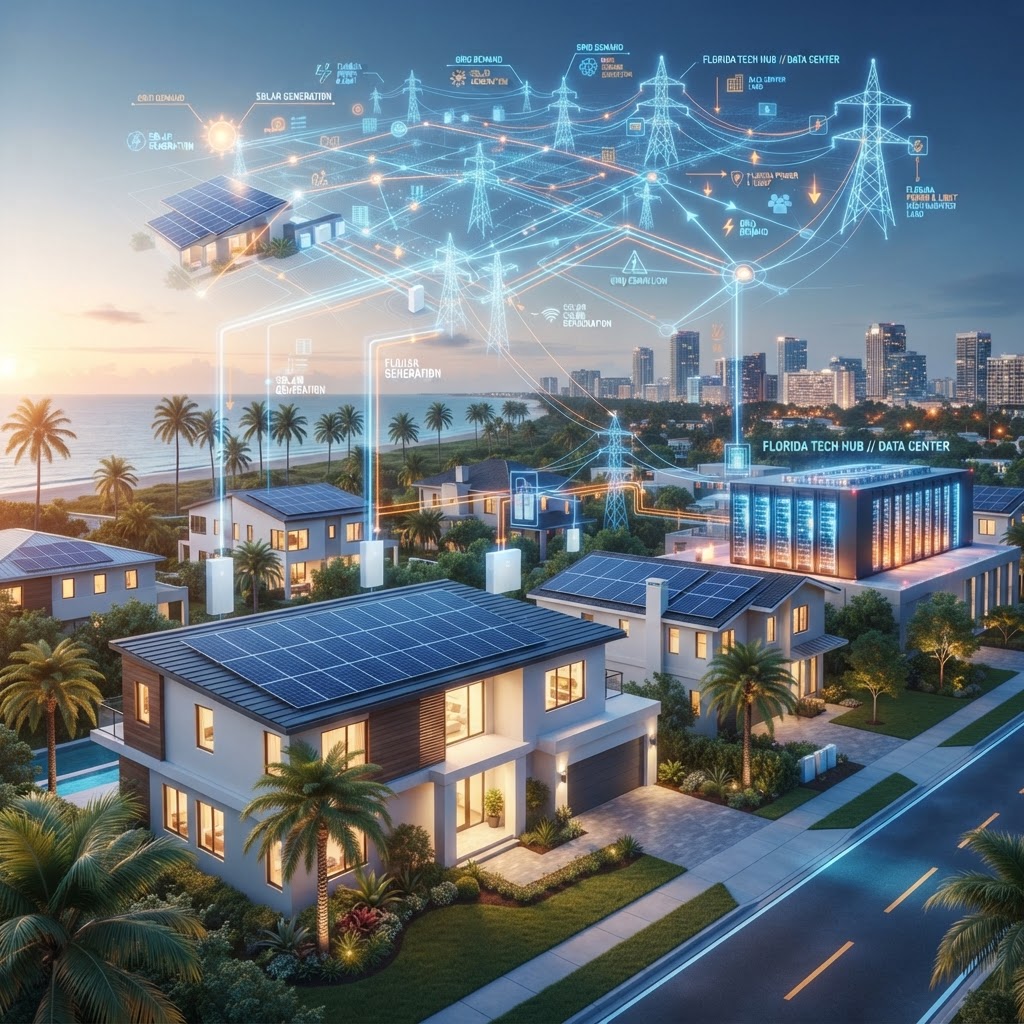
FPL New Data Center Rules: Impact on Your Electric Bills 2026 – The Definitive Master Guide
Introduction: The New Energy Reality
Florida has rapidly transformed into a global nexus for digital infrastructure. The influx of hyperscale data centers—colossal facilities hosting thousands of servers that process, store, and transmit massive quantities of data—has fundamentally changed the load profile of the Florida Power & Light (FPL) grid. For the Florida homeowner, these shifts raise critical questions about the security, cost, and long-term sustainability of the electric bill. This master guide explores the complex relationship between hyperscale commercial demand and residential rate stability.
I. Technical Analysis: The Data Center Grid Load
To understand the impact on your bill, we must first analyze the unique energy consumption profile of these facilities. Unlike residential neighborhoods that follow a diurnal cycle (high usage in the morning and evening, lower in the mid-day/overnight), a data center operates at a near-constant "flat" load of 99.999% of its capacity 24/7.
The "Base Load" Pressure
Hyperscale data centers exert a constant strain on transmission and distribution systems. FPL must reinforce local substations and build new transmission lines to ensure these facilities receive the reliable power they require. This creates an immediate need for:
- Upgraded Transmission Infrastructure: Higher-voltage, high-capacity lines capable of transporting massive amounts of power over long distances.
- Transformer and Substation Reinforcement: Upgrading localized nodes in the grid to handle a high-constant load, preventing brownouts during peak temperature events.
II. The Regulatory Framework: How FPL Rates Are Set
FPL operates under the regulatory authority of the Florida Public Service Commission (FPSC). Rates are not arbitrary; they are determined through rigorous, multi-year rate case proceedings.
Residential vs. Industrial Rate Classes
It is crucial to understand that data centers are not "residential" customers. They are classified as Large Power/Industrial users.
- Segmented Billing: They are billed under tariff structures designed specifically for high-load customers.
- The Cost Causation Principle: The FPSC mandate dictates that utilities must apply the "Cost Causation" principle, meaning the costs associated with the unique transmission requirements of a data center should be paid by the entity requesting the connection, not by the average residential ratepayer.
III. Assessing the "Pass-Through" Cost Risk
Despite regulatory safeguards, homeowners remain concerned about hidden costs. In 2026, the potential for a "pass-through" exists if total system infrastructure costs grow faster than the revenue generated by these new commercial load tariffs.
Fuel Costs vs. Base Rate
It is important to distinguish between "Base Rate" and "Fuel Adjustment" costs on your bill. Hyperscale data center load growth impacts the utility’s overall fuel hedging strategy. As FPL expands its natural gas and solar capacity to meet this massive new demand, it must optimize its power generation fleet.
IV. The 2026 Legislative Landscape
The Florida legislature has kept a watchful eye on these developments. As of August 2026, the FPSC is conducting a series of workshops and regulatory reviews to determine if new rules are necessary to further insulate residential ratepayers from hyperscale-triggered infrastructure costs. This ensures that residential reliability is not sacrificed to meet the demands of commercial digital infrastructure.
V. Solar Energy: Your Ultimate Hedge Against Volatility
With grid costs shifting to accommodate industrial expansion, the most effective tool a homeowner has is distributed generation.
Locking in Energy Costs
By installing a residential solar array, you are essentially "locking in" a portion of your electricity usage at a fixed cost. Because Florida maintains 1:1 retail-rate net metering for most residential users, your exported energy is credited at the same value as your imported retail energy. This effectively isolates you from future fluctuations in utility-wide generation costs and fuel price volatility.
Recommended System Sizing (FPL Load Logic)
- Load: Under 1,000 kWh/mo | 8 kW Array | 7.6 kW Inverter
- Load: 1,500 kWh/mo | 12 kW Array | 10 kW Inverter
- Load: 2,000 kWh/mo | 14 kW Array | 10 kW Inverter
- Load: 3,000+ kWh/mo | 18 kW+ Array | 15 kW Inverter
VI. Comprehensive FAQ: Data Centers and Your Bill
Q: Will FPL build new power plants just for data centers? A: FPL is currently expanding its solar and natural gas infrastructure to meet total system demand, of which data centers are a growing, though not exclusive, component.
Q: Are my rates subsidizing these facilities? A: Under current FPSC regulations, utilities are required to ensure that rates for specific classes reflect the costs of serving those classes.
Q: What if I have solar? A: Homeowners with solar are significantly less susceptible to grid-wide rate increases because they generate their own energy locally.
VII. Conclusion: Staying Vigilant
As Florida’s tech infrastructure expands, the role of the Florida Public Service Commission as a consumer watchdog becomes even more critical. Homeowners should stay engaged with public docket filings to ensure transparency remains the priority in utility grid development.
<sub>Disclaimer: This is an educational guide. All energy decisions should be reviewed with licensed professionals.</sub>",id:
Want these numbers for your own home?
Get a free, independent consultation with a Florida advisor — no pressure, no obligation.
Request my free consultation